Hi! I'm Hayley Hutson
I’m a freelance writer based in Charlotte, North Carolina. I have a passion for helping small businesses thrive, and a knack for doing so by creating content that resonates with their audience.
Let's Bring Your Vision to Life! Get in touch

Whether you’re a small business owner, a service-based coach, or a content creator, creating an effective content strategy is crucial. It’s how you connect with your target audience, position yourself as the obvious choice, and turn leads into sales.
In 2025, you can’t just wing it and hope for the best. You need a solid framework that keeps things organized and helps you achieve your business goals. Your content strategy can be the difference between slipping into obscurity and landing your dream clients.
As a content strategist and copywriter, I’ve worked with hundreds of brands to create or refine their strategies. In this guide, I’ll walk you through the same—how to create a content strategy that boosts visibility and drives results. If you follow these steps, you can knock this out in a day.
A strong content strategy isn’t something you slap together over coffee and a half-hearted Google search. It’s the backbone of everything you publish: the difference between “just posting” and building a brand that people can find, trust, and buy from.
And guess what? You don’t need a huge team or endless hours glued to your laptop to make it happen. Here’s my step-by-step process for creating a content strategy that drives results.
Quick Steps:
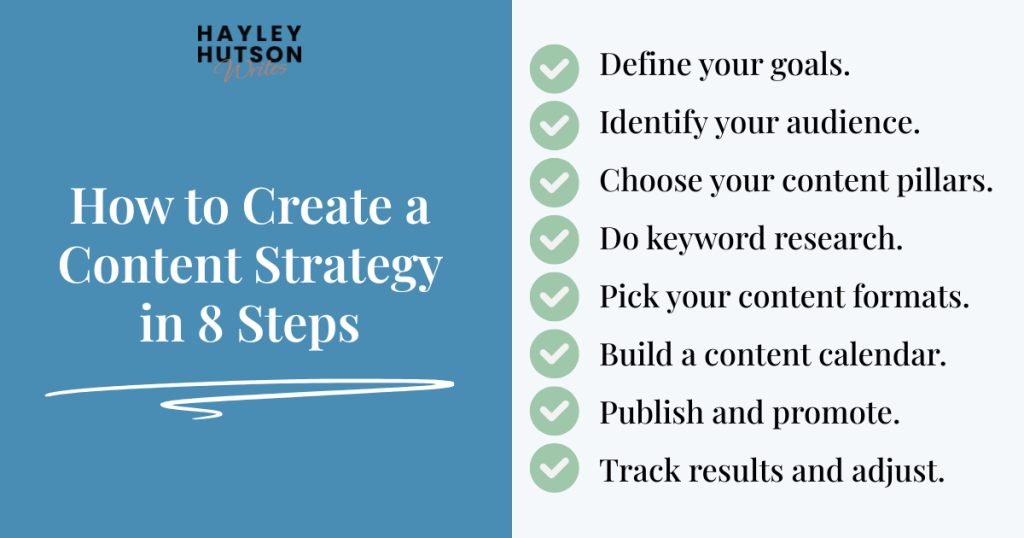
If you don’t know what you want from your content, you’re basically tossing words into the void and crossing your fingers. Your goals are the foundation of your strategy, so get specific and measurable. The clearer you are, the easier it is to create content that helps achieve your goals.
Ask yourself:
“Post more on Instagram” isn’t a measurable goal. “Increase website traffic by 30% in the next 6 months” is. Keep that in mind when building out your content marketing strategy.
If your content is for everyone, it’s really for no one. To create posts that resonate, you need to understand exactly who you’re talking to—what they want, what’s keeping them up at night, and how you can help them. The deeper your insight, the more powerful your content becomes.
Ask yourself:
Go beyond basic demographics. Targeting a “business owner in their thirties” is fine, but targeting a “35-year-old business owner who’s sick of chasing clients and wants more inbound leads with minimal output” is a lot more to work with. Don’t be afraid to get hyper-specific when deciding who your dream client is.
Your content pillars are the core topics you want your brand to be known for. They give your content direction and purpose. Instead of scrambling for ideas each week, you’ll have a clear set of themes to pull from that align with both your expertise and your audience’s needs.
How to choose your pillars:
Example 1: A tourism board might have content pillars like “Seasonal Travel Guides,” “Local Food & Drink,” and “Off-the-Beaten Path Adventures.”
Example 2: A holistic nutritionist might have pillars like “Holistic Health and Nutrition Tips,” “My Personal Origin Story,” and “What Healthy Living Looks Like.”
SEO is your best friend, your partner in crime, the Louise to your Thelma. You can have the best content in the world, but if no one can find it, who cares? Tools like Ubersuggest, SEMrush, or Google’s Keyword Planner can help you figure out what your target audience is searching for.
Look for:
Pro tip: Don’t just go after the “big” keywords. Long-tail keywords (like “best coffee shops in Charlotte NC”) may have lower search volume but higher conversion rates.
Different messages shine in different formats, and your audience likely consumes content in more than one way. Whether it’s blog posts, emails, or social media, picking the right mix will help you maximize your reach without doubling your workload.
Repurposing is your best friend. You can easily turn a single blog post into a…
Pick formats you can realistically create consistently, and remember: you can repurpose one piece of content into multiple platforms without having to start from scratch.
Your calendar is your consistency safety net. It ensures you’re building momentum over time, not just creating content at random when inspiration strikes. With a clear schedule, you’ll know exactly what to publish, when, and where—without any last-minute scrambles.
A solid content calendar should include:
Plan at least one month ahead, but stay flexible enough to jump on trending topics when they make sense for your audience and brand.
Sorry friend, but hitting “publish” is only the halfway point. For your content to work, it needs to be seen—and that means active promotion. Sharing across channels, emailing your list, and repurposing into smaller pieces will keep your content working long after it goes live.
You should be:
Don’t forget: Publishing is just step one. Promotion is what gets your content seen, and the occasional refresh keeps it ranking strong.
Even the tightest content strategy needs fine-tuning. Track your performance with tools like Google Analytics and Search Console to see what’s resonating and what’s not. With that data, you can double down on what works and cut the rest, so your strategy gets sharper over time.
Pay attention to:
If a certain topic or format is killing it, put out more of it. If something’s flopping, adjust your approach so you can focus on creating content that drives results.
A content strategy is your roadmap for building trust with the right people and turning that attention into results. The brands that win online aren’t always the loudest; they’re the ones with a clear plan, consistent execution, and the ability to adapt when things change.
When you take the time to define your goals, understand your audience, and create a strategy that blends SEO with storytelling, you stop creating content just to stay active and start creating content that moves your business forward.
If you’re ready to skip the trial-and-error phase and build a content strategy that works from day one, I can help. Whether you need a 3-month roadmap, optimized blog posts, or a full content plan, I’ll make sure every word has a purpose—and a job to do. Get in touch and let’s chat!
I’m a freelance writer based in Charlotte, North Carolina. I have a passion for helping small businesses thrive, and a knack for doing so by creating content that resonates with their audience.